


Footings Contractor
WHAT WE OFFER
The foundation of any building is literally what everything else sits on. Proper footings are not just the starting point of your build.
They are the underlying foundation that ensures structural integrity for decades to come. Without properly constructed footings even the most beautiful building can have serious structural issues down the track.
Expert Foundation
Solutions
Specialising in all foundation types to ensure your building stands on solid ground for decades to come.
Building Regulation
Compliant
Full adherence to UK building standards with proper documentation and inspections for complete peace of mind.
Professional Equipment
& Expertise
Our experienced team utilises specialised machinery and technical knowledge for precision foundation work.
We Take On All
Project Types
From residential extensions and new homes to garages and commercial buildings—we’re your trusted footings partner.
Introduction
Footings are the interface between the ground and your structure, distributing the weight evenly and preventing settlement or movement that could compromise your whole project. This is a critical element that requires special knowledge, equipment and experience that only a professional footings contractor can provide.
Whether you are a private homeowner building an extension, an architect designing a custom home, an engineer writing specifications or a builder managing a development, working with a trusted footings contractor is key to your project’s success. The decisions made at this stage will impact everything else that follows.
In this guide we will look at the role of professional footings contractors, the different types of foundations, the regulations that apply and how the right expertise can save you from costly mistakes and ensure your building stands for generations.
Professional Foundations
Digging foundations isn’t just about digging soil. It’s about structural engineering, soil mechanics, local ground conditions and current building regulations. Professional footings contractors have years of experience and technical knowledge that can’t be substituted by general construction knowledge.
According to the Royal Institution of Chartered Surveyors, 80% of structural problems in buildings can be attributed to foundation problems. That’s a scary statistic that highlights how important it is getting your footings right first time.
Professional footings contractors have:
In depth knowledge of soil conditions and how they interact with different types of foundations
Experience of interpreting geological surveys and reports
Understanding of load calculations and weight distribution
Knowledge of current UK building regulations and compliance requirements
Access to specialist excavation equipment and concrete mixing technology
Ability to foresee and navigate potential problems before they become expensive issues
The foundations literally support everything above them, so they are the most important part of your whole build. Cutting corners at this stage can lead to problems down the line from minor settlement cracks to catastrophic structural failures that require a complete rebuild.
Building Regulations for Footings
The UK has strict building regulations for foundation construction and for good reason. These regulations ensure all buildings are built to withstand the conditions of their location and use.
Building regulations specify dimensions for footings including thickness and width. These are not arbitrary they are calculated on:
Type of structure (residential, commercial, garage etc)
Height and weight of the building
Load bearing capacity of the subsoil
Regional factors such as frost depth and moisture conditions
Proximity to trees, other structures or slopes
Building regulations also specify the concrete strength required for different applications. These are denoted by codes such as C15, C20 and C35 with the number being the compressive strength of the concrete in newtons per square millimetre (N/mm²) after 28 days curing. Higher numbers mean stronger concrete for more demanding applications.
Compliance is not optional. Building control officers will inspect and approve your footings at key stages. Failure to comply can mean costly remedial work, project delays and potential legal problems if the property is sold in the future.
Professional footings contractors keep up to date with these regulations and how they apply to your project so you stay compliant throughout the build.
Types of Foundations and Footings We Specialise In
At Plant Hire Now our foundations team specialise in all types of foundations, each suited to different building requirements and ground conditions. We can recommend and install the right solution for your project.
Individual footings, also known as pad foundations, are used to support concentrated loads from individual columns or posts. These are usually square or rectangular concrete blocks under each load bearing point.
These are good for:
Structures with load bearing points
Buildings with skeletal frames
Good soil bearing capacity
Where economy of materials is important
Individual footings are very efficient in material usage and provide support exactly where needed.
Strip foundations are the most common type used in residential construction in the UK. As the name suggests, these are continuous strips of concrete that run beneath load bearing walls.
Strip foundations are suitable for:
Traditional brick and block construction
Extensions to existing properties
Residential builds on stable ground
Projects where wall loading is uniform
We calculate the required width and depth of strip foundations based on wall thickness, building height and soil conditions.
Raft foundations are a reinforced concrete slab that extends under the whole building footprint, effectively allowing the structure to float on unstable ground. This type of foundation spreads the load of the building over a much larger area.
Raft foundations are suitable for:
Poor soil conditions
High water tables
Builds where differential settlement is a concern
Evenly distributed loads
The engineering behind a proper raft foundation is complex and requires expert knowledge to get the thickness, reinforcement and edge detailing right.
When the ground is tough, piled foundations are the answer. These involve driving or boring deep columns (piles) into the ground until you reach stable soil or bedrock, then connecting them with ground beams.
Piled foundations are for:
Very weak or variable soil conditions
Filled ground or made-up ground
High clay content that shrinks
Taller structures that need deeper support
We use different piling techniques depending on the site requirements, driven piles, bored piles and screw piles.
Each foundation type requires specific expertise, equipment and methodology. Our team at Plant Hire Now assess every project to determine the best and most cost effective foundation solution for your needs.
Our Footings Process
Professional footings contractors follow a process to ensure your footings are built to perfection. Understanding this process will help you appreciate the complexity and value that experts bring to this critical stage of construction.
Site Assessment and Ground Investigation
Before any digging begins our team will conduct a site assessment. This may include:
- Soil testing to determine load bearing capacity
- Checking for underground services and utilities
- Looking at drainage patterns and water table levels
- Looking at nearby structures and their footings
- Assessing access for machinery and concrete delivery
This stage usually takes 1-3 days depending on the site but saves a lot of time and money by preventing surprises later.
Planning and Marking
Once we have the site conditions we plan and mark out the foundation layout. This includes:
- Setting levels with laser equipment
- Marking trench positions according to architectural plans
- Calculating exact depths based on soil conditions
- Planning for service entries and drain runs
- Calculating concrete volume
This planning stage ensures the excavation will match your design and building regulations.
Excavation with Underground Services
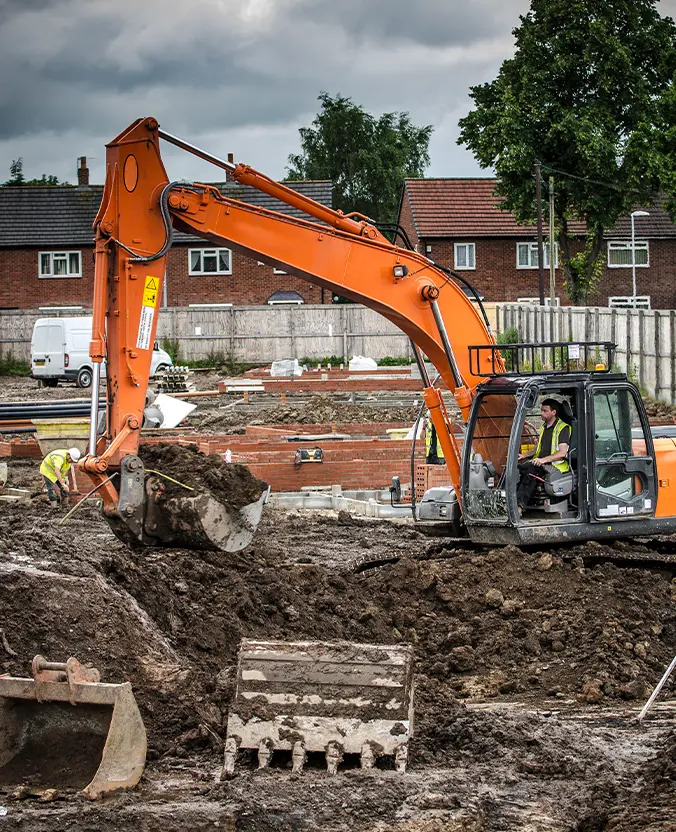
Excavation requires power and precision. Our operators use the right machinery and are aware of the obstacles. We:
- Navigate around existing services
- Hand dig in areas near utilities
- Monitor soil conditions as we dig, adjust depths if needed
- Create level bottoms in trenches for even concrete
- Form stepped footings where the ground changes
Building Control Inspection
Once trenches are dug to the required depth and width, a building control officer must inspect them before concrete is poured. Our team:
- Book the inspection to avoid delays
- Ensure the trenches are clean and ready for inspection
- Provide all necessary documentation and calculations
- Address any concerns or requirements the inspector may have
This is a critical compliance step and usually happens within 48 hours of excavation being complete.
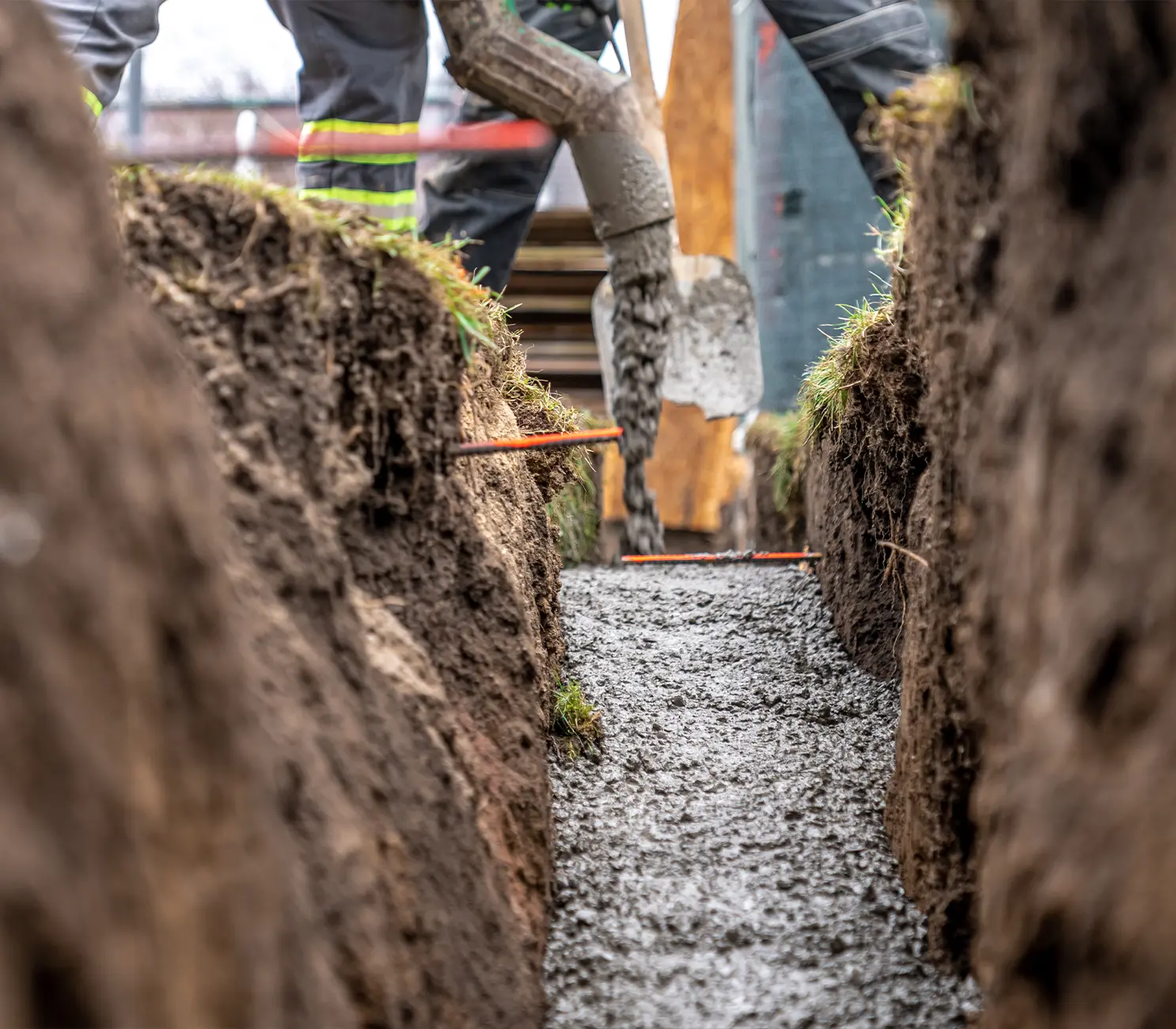
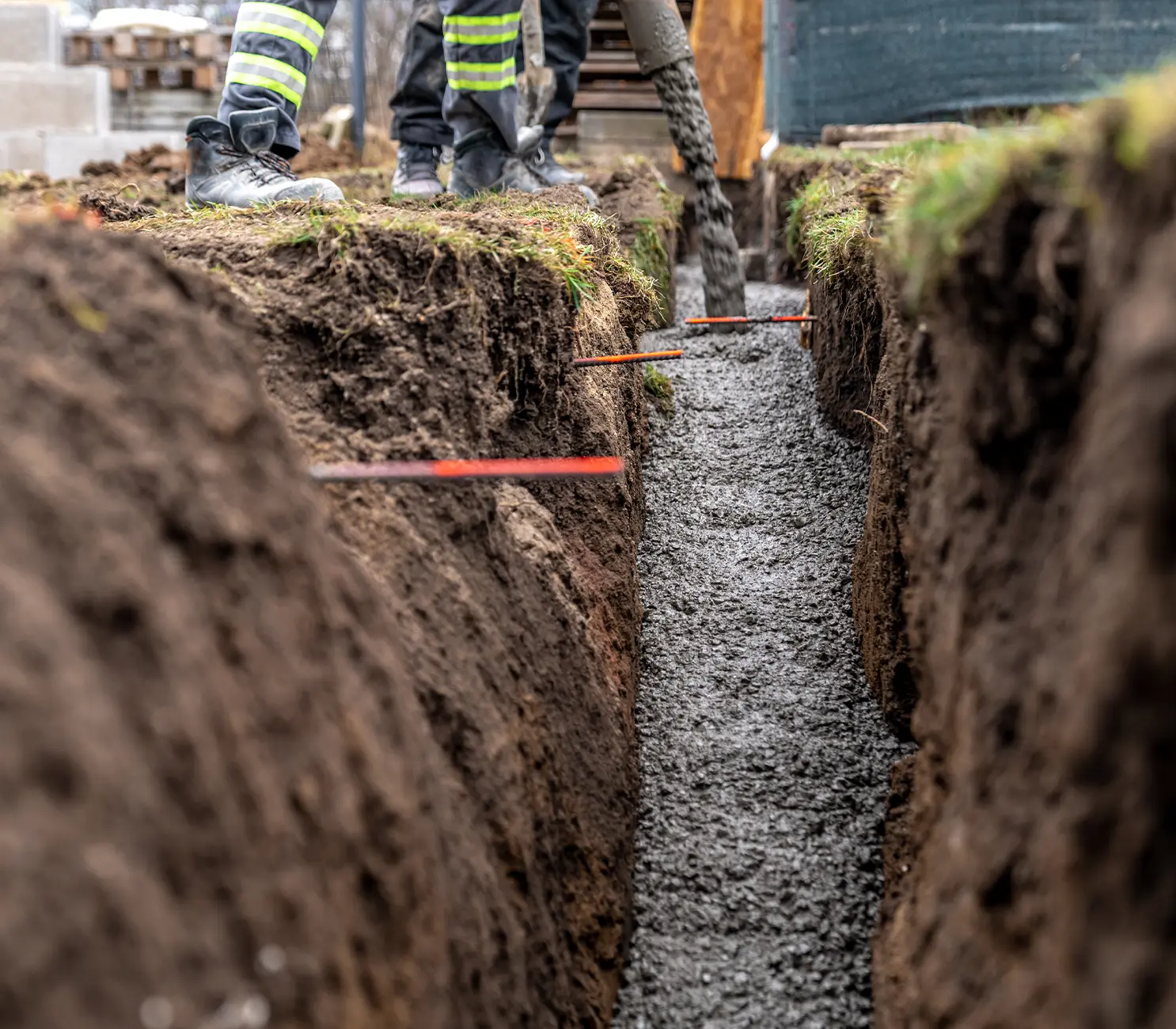
Concrete Pouring and Finishing
With approved excavations we move on to the concrete phase:
- Using the correct concrete mix for your project
- Ensuring the right delivery time to maintain concrete quality
- Pouring methodically to avoid air pockets or uneven distribution
- Vibrating the concrete where necessary to get rid of voids
- Finishing the surface according to the next construction phase
The concrete pour takes 1-2 days, but curing time must be allowed before construction can continue—usually 7 days before significant loads are applied.
Each stage is documented and done to exacting standards so your foundation will last for decades to come.
Site Challenges and Obstacles
Every site has its challenges, especially during the foundations phase when there’s so much unknown beneath the surface. Experienced footings contractors know how to identify and fix these challenges before they become big problems.
Concrete Pouring and Finishing
One of the biggest risks during foundation work is hitting underground services. Damage to gas, water, electrical or telecommunications services can be dangerous, expensive and cause big delays to your project.
Our approach:
- Service searches before excavation starts
- CAT scanners and ground-penetrating radar where necessary
- Hand digging around services
- Working with utility companies when services need to be diverted
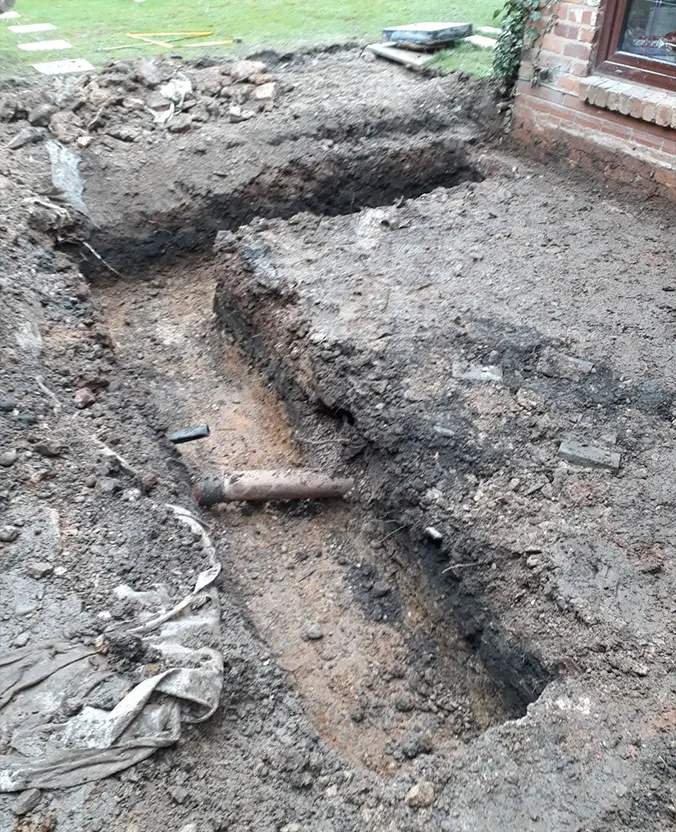
Drainage Systems and Pipe Networks
Building over or near drainage systems requires extra care. Regulations dictate specific ways of working around drains and damage can cost a fortune to repair.
We specialise in:
- Identifying existing drainage runs with CCTV surveys
- Designing foundations around drain positions
- Protecting drains during work
- Installing lintels over drains where foundations cross them
Planning around drainage systems prevents future subsidence and flooding problems.
Challenging Ground Conditions
The UK’s varied geology means we often come across difficult ground conditions that need expertise to overcome:
- Clay soils that shrink and swell with moisture changes
- Sandy or loose soils with poor load bearing capacity
- Waterlogged ground that needs dewatering
- Contaminated soils that need special handling
- Fill material or previously disturbed ground
We adjust our foundation designs and methods to suit the conditions we find, so foundations are stable whatever the ground.
Building Inspector Requirements
Building control requirements are non negotiable. Our experience with local building control officers across the UK means we know what they want:
- We keep detailed records of soil conditions
- Provide proof of foundation design
- Ensure trenches are clean and prepared for inspection
- Schedule inspections at the right time to avoid delays
By having good relationships with building control departments we can get your project through the regulatory process smoothly.
Footings Contractor Services
At Plant Hire Now our footings and foundations service covers all sizes of projects. Our team are just as thorough whether we’re working on a small garden room or a multi storey apartment block.
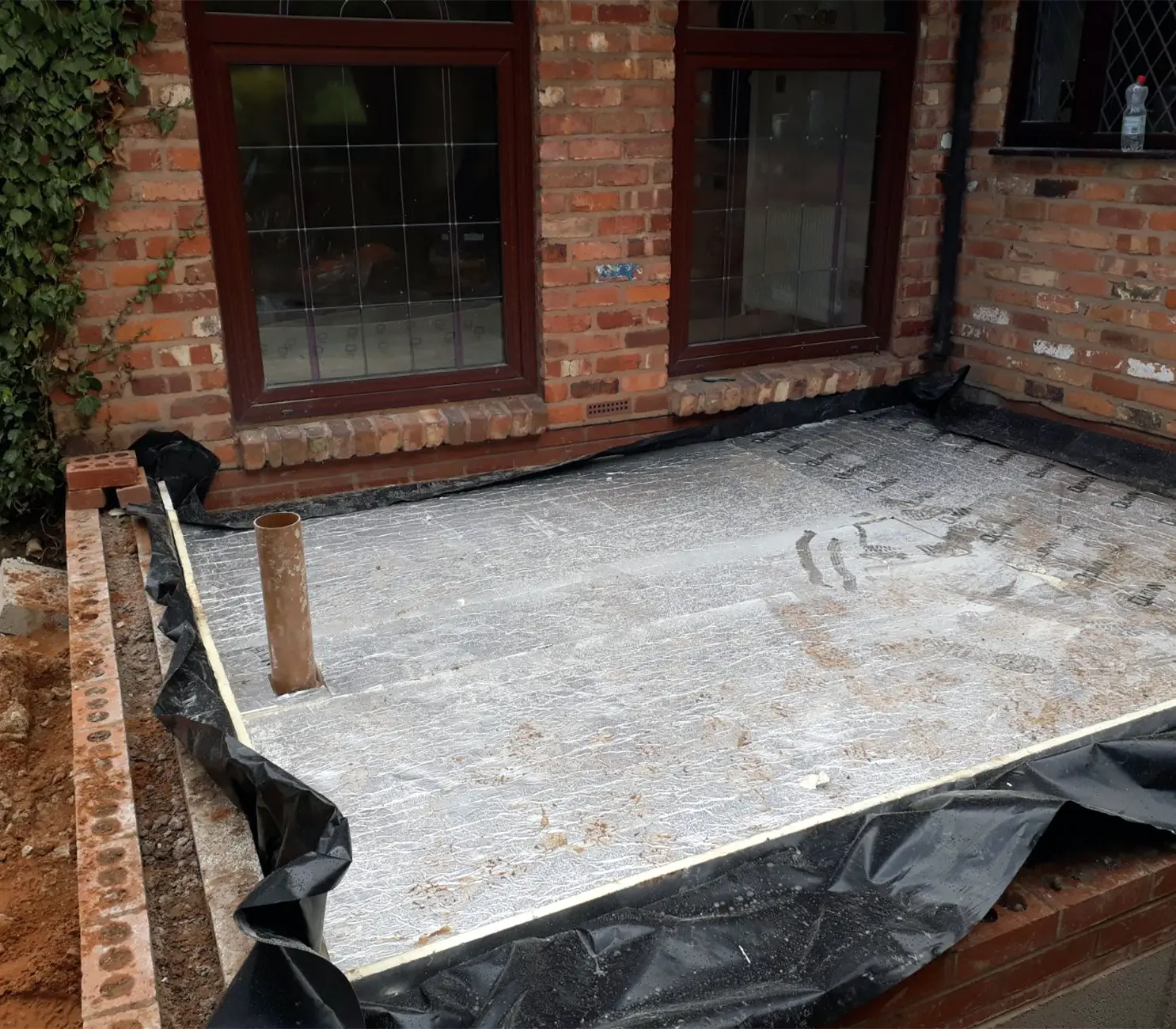
Residential Extensions
Extensions need special care to work with existing foundations. We offer:
Matching new foundations to existing foundation types where possible
Tying in new to old foundations
Managing level differences between existing floors and extensions
Connecting services between existing buildings and extensions
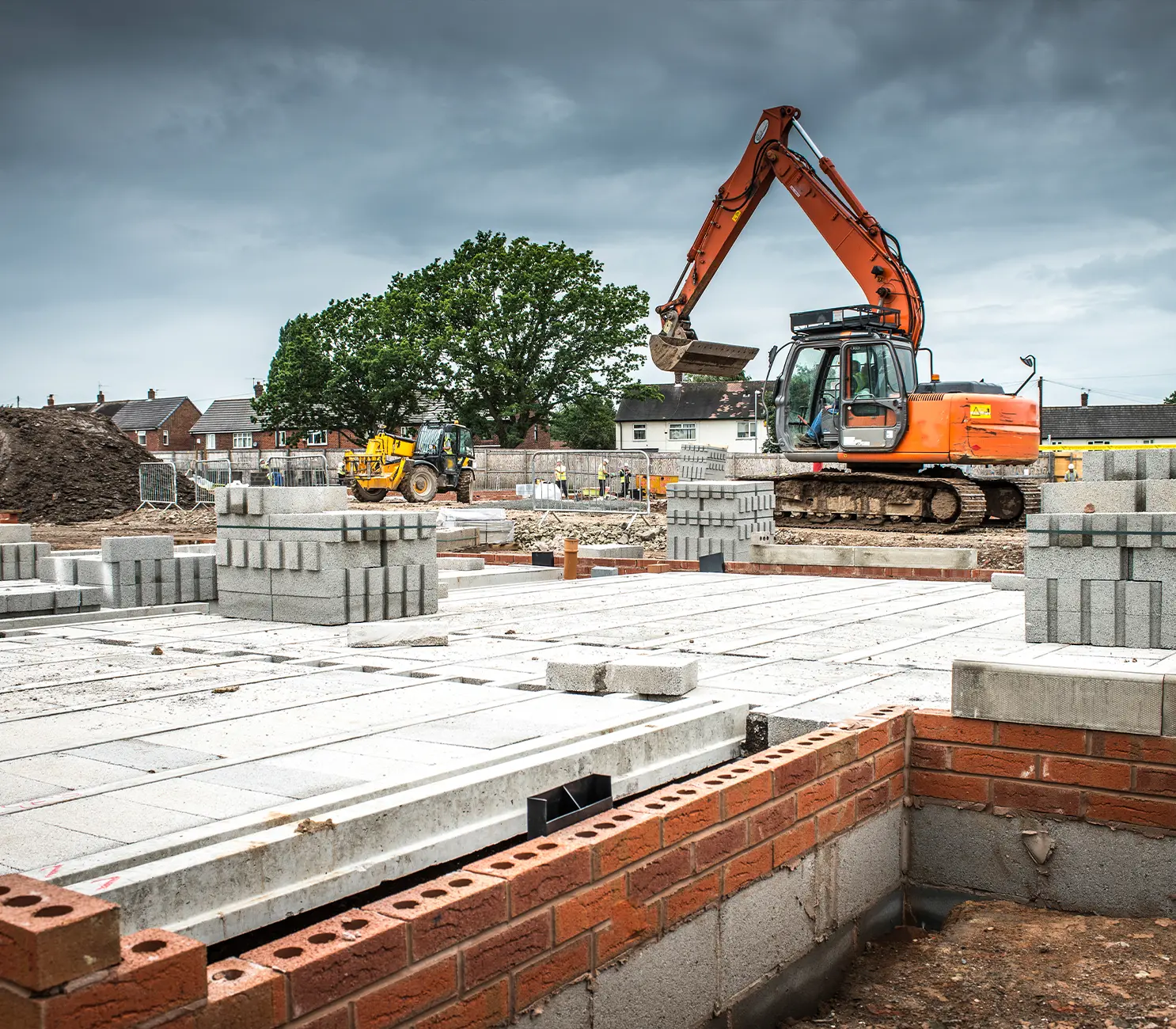
New Home Construction
From one off bespoke homes to multiple unit developments we offer full foundation solutions:
Working from architectural plans to get the foundation layout exact
Coordinating with other contractors to get the project schedule right
Foundation design to maximise construction efficiency
All groundworks completed to the highest standard
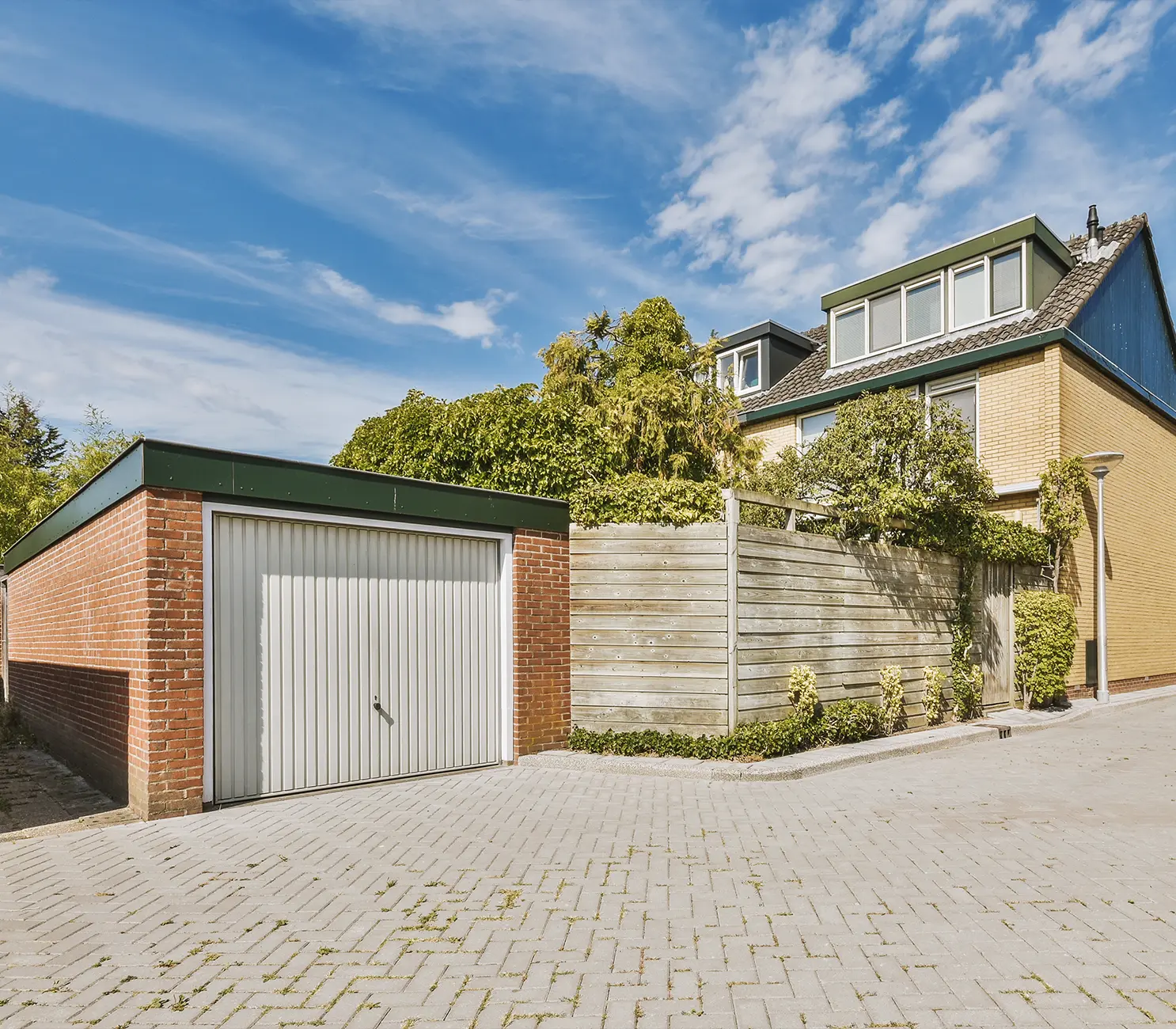
Garage and Outbuilding Foundations
Even small structures need proper foundations:
Designing foundations for intended use and loading
Drainage considerations for detached structures
Bases for prefabricated buildings
Frost protected shallow foundations where needed
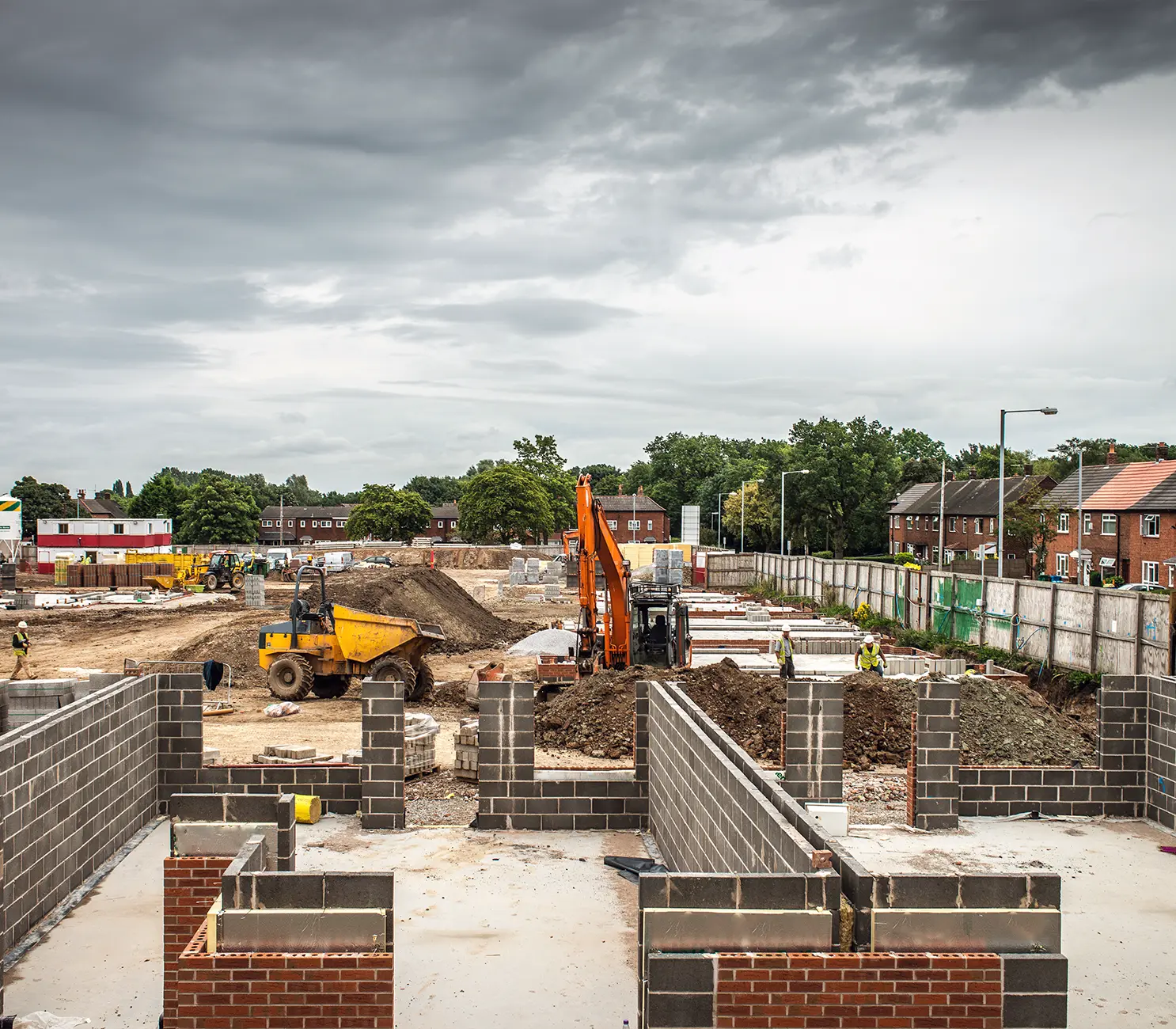
Commercial Building Footings
We have experience with larger commercial projects:
Managing complex foundation requirements for bigger structures
Coordinating with structural engineers for custom designs
Foundations for higher load requirements
Logistics of larger foundation pours
Our team uses a range of specialised equipment, mini-excavators for tight spaces, larger excavators for bigger jobs, laser levels for depth control, and compaction equipment for ground preparation.
Why Use a Contractor For Your Buildings Foundation?
Choosing the right footings contractor is one of the biggest decisions you’ll make on your build. The consequences of this decision last the life of your building.
While it may seem like you can save money by cutting corners on foundations since they’re invisible, this approach will cost you big time:
- Remedial work on failed foundations costs 3-4 times the original proper installation
- Structural issues from bad foundations affect everything above, so repair costs multiply
- Property value can be significantly reduced when foundation problems arise
- Insurance will reject claims if foundations don’t meet building regulations
Foundation failures rarely happen overnight, they develop over 5-10 years by which time the cost and disruption of repairs is much higher than doing it right the first time.
Your whole structure starts with a solid base:
- Load distribution prevents settlement and cracking
- Right foundation type for the soil
- Concrete specs for durability in any ground
- Professional detailing at key joints to prevent water ingress and future damage
Beyond the technical benefits, working with professionals gives you:
- Full compliance with current UK building regulations
- Proper documentation for future sales
- Warranty on workmanship
- Professional indemnity insurance
- Building control sign off without hassle
Professional footings contractors bring efficiencies that will surprise you:
- Accurate timelines based on years of experience
- Established relationships with suppliers and inspectors
- Can adapt quickly if unexpected ground conditions are found
- Coordinate with other trades to avoid scheduling conflicts
Foundations You Can Trust
Don’t leave your building project to chance or inexperience. As we’ve shown above, professional footings contractors bring specific knowledge, equipment and experience that directly impacts the long term success of your build.
At Plant Hire Now our foundations team have expertise in all foundation types – from individual footings and strip foundations to more complex raft and piled solutions. We know how important this phase of construction is and approach every project with meticulous attention to detail.
Whether you’re a private homeowner looking to extend, an architect designing a new build, an engineer looking to implement technical specifications or a building contractor needing reliable groundworks, our team can deliver foundations that will last.
Get in touch today to discuss your project requirements or to find out how our footings contractor services can help your build. We’ll get your project off to the right foundation.
Frequently Asked Questions
The depth of extension footings depends on several factors including soil type and proximity to trees. Typically footings must be at least 1m deep or to the depth of the existing foundations whichever is greater. But clay soils or nearby vegetation may require deeper footings to prevent movement caused by seasonal moisture changes.
For most domestic garage foundations C25 concrete is specified. This is sufficient for standard vehicle loading. But if the garage will be housing heavy vehicles or equipment C30 or higher may be required. The correct concrete specification should be determined by the loading requirements and soil conditions.
Yes, almost all foundation work requires building control approval. This involves initial plan approval followed by site inspections at key stages – particularly before the concrete is poured. Professional footings contractors will coordinate these inspections as part of their service so your project remains compliant throughout.
Several things affect the cost:
- Foundation type (strip, raft, piled, etc.)
- Soil conditions and excavation depth
- Site access for machinery
- Concrete volume
- Obstacles or services that require special attention
- Regional variations in materials and labour costs
Experienced contractors can work in most conditions but extreme weather can impact foundation work. Concrete shouldn’t be poured in freezing conditions without special precautions as it affects curing. Very wet conditions can compromise trench stability and concrete quality if not managed properly. Professional contractors schedule work accordingly and take necessary measures to mitigate weather risks.
The right type of foundation depends on many factors such as soil conditions, building design, loading requirements and budget. Our team will do a site assessment and review your plans to recommend the best foundation solution for your project. This tailored approach means your footings will match your project perfectly.
services available throughout
- Avon
- Bedfordshire
- Berkshire
- Buckinghamshire
- Cambridgeshire
- Cheshire
- Cornwall
- Cumbria
- Derbyshire
- Devon
- Dorset
- Durham
- Essex
- Gloucestershire
- Greater London
- Hampshire
- Herefordshire
- Hertfordshire
- Isle of Wight
- Kent
- Lancashire
- Leicestershire
- Lincolnshire
- Merseyside
- Norfolk
- Northamptonshire
- Northumberland
- Nottinghamshire
- Oxfordshire
- Rutland
- Schools
- Shropshire
- Somerset
- Staffordshire
- Suffolk
- Surrey
- Sussex
- Tyne and Wear
- Warwickshire
- West Midlands
- Wiltshire
- Worcestershire
- Yorkshire